Ollie Harrington

-
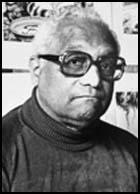
Ollie Harrington (1912-1995) was born in Valhalla, New York, a town whose name from Germanic mythology accidentally predicted his three decades of exile in East Germany. A visual artist whom Langston Hughes praised as “America’s greatest African-American cartoonist,” Harrington was also a significant political essayist and literary inspiration. In 1935, the Harlem Amsterdam News began running his comic strip Dark Laughter, its title signifying on Sherwood Anderson’s Negrophilic novel of 1925. Bootsie, the strip’s regular focus, was an African American everyman who remained Harrington’s most popular spokesman. “Jolly, rather well fed, but soulful,” as Harrington described him, Bootsie was in all three respects similar to his creator. In 1951, inspired in part by intrusive FBI surveillance, Harrington moved to Paris and became Richard Wright’s closest companion in a black expatriate community including James Baldwin, Chester Himes, and William Gardner Smith, all of whom drew on aspects of Harrington’s character in their Paris-set novels. When Wright died suddenly in 1960, Harrington suspected an assassination by the FBI and/or CIA. American-made “cloak-and-dagger terrorism,” Harrington believed, had doomed “the climate around the expatriate Paris community.” Moving even further toward the political left, Harrington requested political asylum in Communist East Germany in 1961. Harrington’s published writing, some of it produced as an international correspondent for the Pittsburgh Courier, includes Terror in Tennessee: The Truth about the Columbia Outrages (1946) and the posthumous collection Why I Left America and Other Essays (1993). The FBI returned Harrington’s deep suspicion with a file stretching half a century, all the way from 1951 to 2002.